

Description
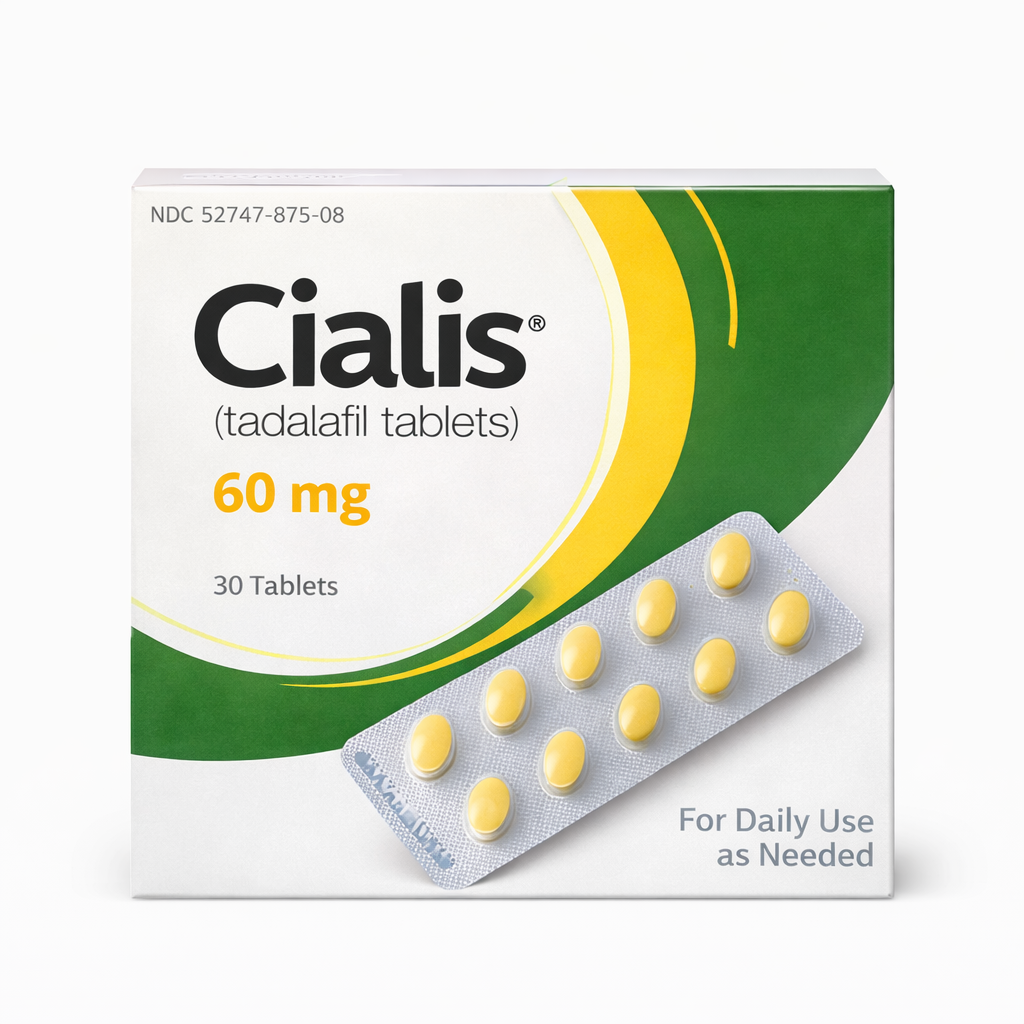
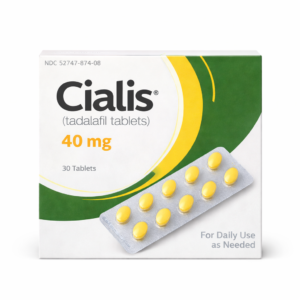
Cialis 60 mg (Tadalafil) – In Detail
Cialis contains tadalafil, a medication from the phosphodiesterase type-5 (PDE5) inhibitor class. Tadalafil is commonly prescribed for erectile dysfunction (ED) and benign prostatic hyperplasia (BPH) at approved doses (typically 2.5 mg, 5 mg, 10 mg, or 20 mg).
Cialis 60 mg refers to a non-standard, higher-than-approved strength. Such doses are not routinely recommended in clinical guidelines and may increase the risk of side effects. Any use or discussion of higher doses should occur only under strict medical supervision.
What Is Tadalafil Used For?
Tadalafil is prescribed for:
- Erectile dysfunction (ED)
- Benign prostatic hyperplasia (BPH)
- Men with both ED and BPH (at approved daily doses)
Clinical decisions are based on medical history, cardiovascular status, and response to treatment.
How Tadalafil Works
Tadalafil improves blood flow by relaxing smooth muscle and blood vessels.
In ED, increased blood flow to the penis helps support an erection when sexual stimulation occurs.
For BPH, muscle relaxation in the prostate and bladder can improve urinary symptoms.
About the 60 mg Strength (Safety Context)
- Not an FDA-approved dose for Cialis
- Higher doses do not necessarily improve effectiveness
- May increase the likelihood and severity of side effects
- Requires careful medical evaluation if considered in any context
Patients should not self-adjust doses or exceed prescribed amounts.
Duration of Action (General Tadalafil Information)
- Tadalafil is known for a long duration of action, up to 36 hours
- Effects are not immediate and require sexual stimulation
- Longer duration does not mean continuous effect
Dosage & Administration (General Guidance)
- Tadalafil should be taken exactly as prescribed
- Approved dosing varies by indication (daily vs as-needed)
- Extended or higher dosing should never be used without medical guidance
Important Precautions
- Do not use with nitrates (risk of dangerous blood-pressure drops)
- Caution in people with heart disease, low blood pressure, or stroke history
- Alcohol may increase side effects
- Visual or hearing changes require immediate medical attention
- Higher-than-approved doses may increase adverse events
Possible Side Effects
Side effects may include:
- Headache
- Flushing
- Indigestion
- Back or muscle pain
- Nasal congestion
- Dizziness
At higher doses, side effects may be more frequent or severe.
Safety & Use Considerations
- Use only under medical supervision
- Do not combine with other ED medications unless advised
- Seek medical advice if symptoms persist or worsen
- Avoid unverified or non-prescribed dosing
Cialis 60 mg – Frequently Asked Questions (FAQs)
What is Cialis 60 mg?
Cialis 60 mg refers to a non-standard, high dose of tadalafil. It is not an FDA-approved strength and is not routinely recommended.
Is Cialis 60 mg approved for erectile dysfunction?
No. Approved tadalafil doses for ED are much lower. Using 60 mg is outside standard prescribing guidelines.
Does a higher dose work better?
Not necessarily. Increasing the dose does not guarantee better results and can increase side effects.
How long does tadalafil last?
Tadalafil’s effects may last up to 36 hours, regardless of dose, but this varies by individual.
Can Cialis 60 mg be taken daily?
No. Daily tadalafil regimens use low doses. High doses are not intended for daily use.
What are the risks of higher doses?
Higher doses may increase the risk of headache, low blood pressure, dizziness, vision changes, and other adverse effects.
What should be done if tadalafil does not work at approved doses?
Consult a healthcare provider. They may reassess the diagnosis, timing, interactions, or consider alternative therapies—not simply increase the dose.
Is a prescription required for tadalafil?
Yes. Tadalafil is a prescription-only medication and should be used under medical supervision.
Conclusion
Cialis (tadalafil) is effective for ED and BPH at approved doses. Cialis 60 mg is not a standard or approved strength, and higher dosing may increase risks without added benefit. Safe use depends on proper medical evaluation, correct dosing, and adherence to professional guidance.


Reviews
There are no reviews yet.